The Battling Bastards of Bataan Poem
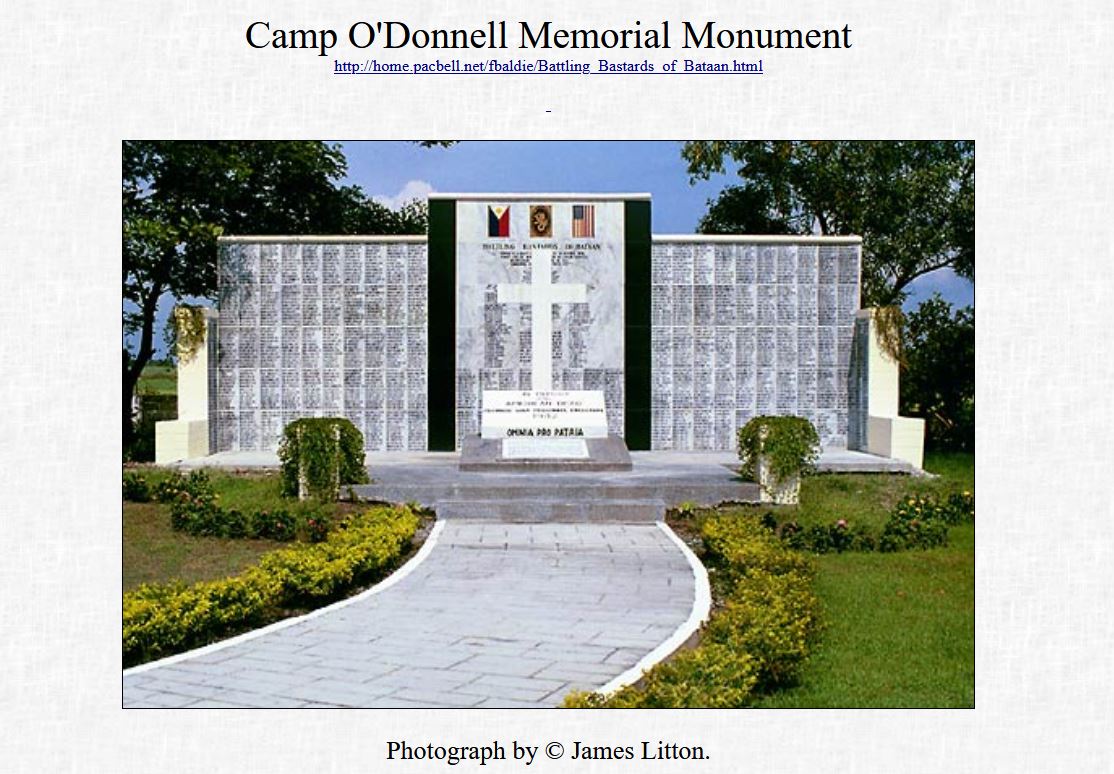
Camp O’Donnell Memorial Monument
————————
–Two current patriots got together and established this URL, click here:
–Google AI Overview:
Written in 1942 by United Press war correspondent Frank Hewlett, the famous sardonic verse captures the desperate, abandoned feelings of the starving US and Filipino soldiers who fought without proper supplies.
We’re the battling bastards of Bataan,
No Mama, No Papa, No Uncle Sam,
No aunts, no uncles, no cousins, no nieces,
No pills, no planes, no artillery pieces,
And nobody gives a damn!
Historical Context
Penned on Corregidor before its fall, the lines served as an anthem for the soldiers fighting in the Battle of Bataan. Outnumbered, diseased, and lacking reinforcements, these troops became famously known as the Battling Bastards of Bataan. Following their surrender on April 9, 1942, the survivors endured the horrific 60-mile Bataan Death March and grueling years in Japanese POW camps.
–Dan Owen in 2011 wrote and played a song THE BATTLING BASTARDS OF BATAAN, based on what UP Correspondent Frank Hewlett wrote while on Bataan in early 1942.
— John Duresky was the researcher for the book: Relentless Hope: A True Story of War and Survival, by David L. Britt
— Only in 2025 did these two Gentlemen get together and posted the above music video. Dan and John have cooperated to update the video using John’s photos, but with Dan’s original music. John added the lyrics at the top of the photos.
— After the music is done, John also made slides to match the photos in the song with an explanation of what is in each of them (their history) to act as an educational tool for people.
— John is a personal friend and he encouraged me to post this on my platforms.
— To this presentation I would like to add 3 more iconic pictures.
————————–
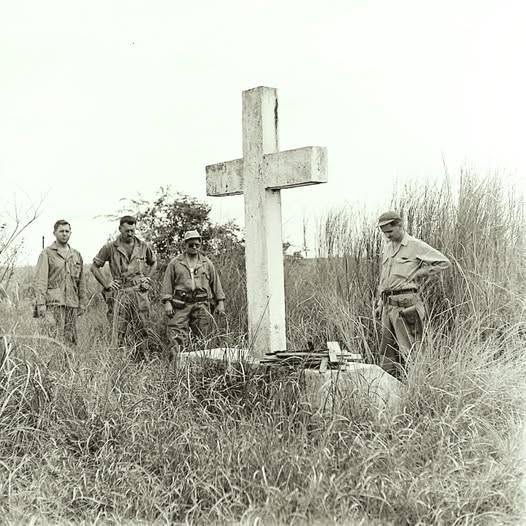
#a The original white concrete cross at Camp O’Donnell, known as the “Sack of Cement Cross” because it was constructed using only a single sack of cement provided by the Japanese. Through the effort of dedicated people the monument was successfully brought to the United States in early 1991 and is now displayed at the National Prisoner of War Museum at Andersonville National Historic Site in Georgia, serving as a powerful symbol of their suffering and sacrifice.
#b The picture above is of the Camp O’Donnell Memorial Monument. The memorial was built by the organization known as “The Battling Bastards of Bataan” to honor those American men who died at Camp O’Donnell, while prisoners of the Japanese. The Cement Cross is a replica of the original cement cross built by the POWs.
The monument is located in the Capas National Shrine, in Capas, Tarlac, Philippines, adjacent to the memorial for the Philippine Army dead. Camp O’Donnell was the first prison camp for the men who survived the “Death March”.
The “Cross” was built as a memorial to the thousands who died in that camp. It is as much a part of Bataan as the participants in that battle. The inscription on the base of the “Cross” reads “Omnia Pro Patria”: All For Country. On the wall behind the “Cross” are inscribed the names of the men who died at Camp O’Donnell.
——————–
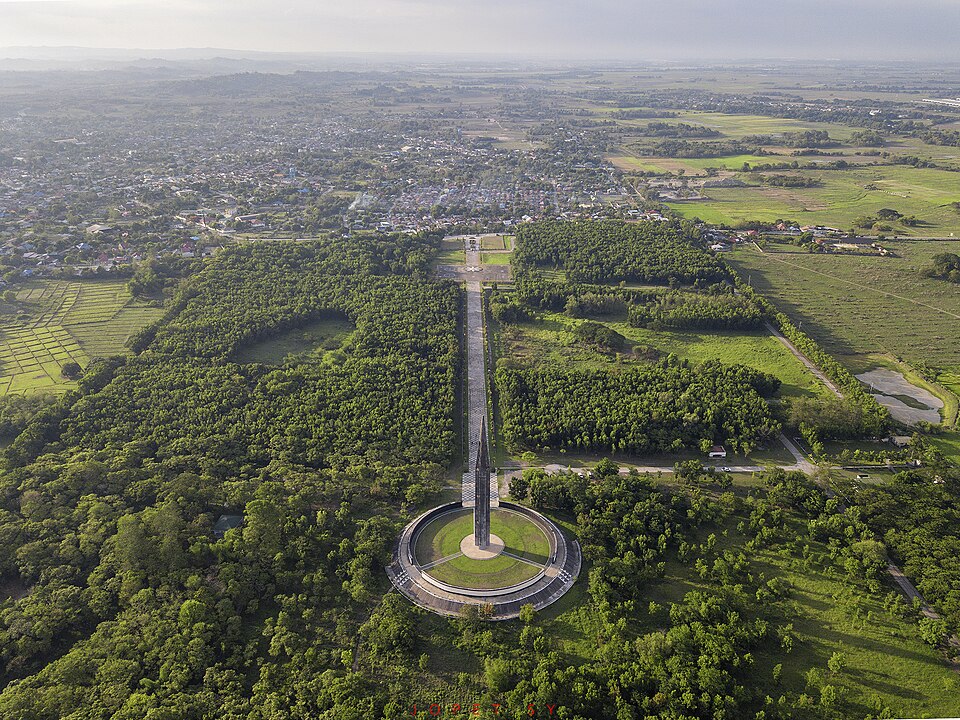
#c Capas National Shrine was built by the Philippine government as a memorial to Allied soldiers who were interned at Camp O’Donnell at the end of the Bataan Death March during WWII.
The site, which was the former concentration camp for the Allied prisoners is a focus for commemorations on Araw ng Kagitingan Araw ng (Valor Day), an annual observance held on 9 April—the anniversary of the surrender of US and Philippine forces to Imperial Japan in 1942. There is also a memorial inside the site to the Czechs who died fighting alongside the Filipino and US soldiers.